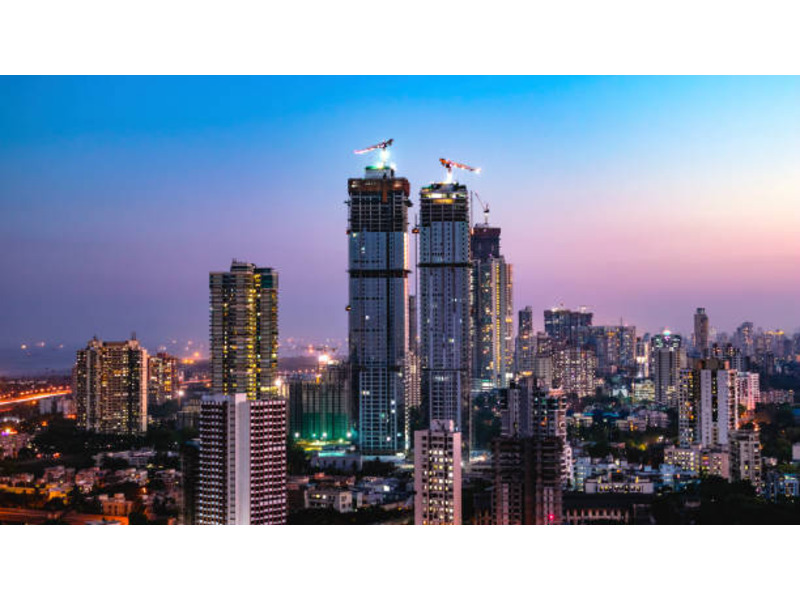
There's a particular kind of confidence that defines a market at its peak — and right now, Mumbai has it. Walk into any new launch event across the city and you'll notice something that wasn't common even three years ago: waitlists. Projects in Powai, Thane, Kandivali, and Chembur are moving inventory in weeks, sometimes days. The city's residential market isn't just recovering — it's running.
But what's actually driving this? And more importantly, where should a serious buyer be looking?
The Demand Is Real — And It's Disciplined
Mumbai's new project boom isn't speculative froth. It's backed by end-user demand, improved developer accountability under RERA, and a generation of buyers who have done their homework. The profile of today's Mumbai homebuyer has changed fundamentally. They come to site visits with questions about OC timelines, FSI utilisation, and possession track records. They cross-check RERA registration numbers before asking about floor plans. They know the difference between a developer's stated possession date and their historical delivery average.
This shift in buyer behaviour has, counterintuitively, made the market healthier. Developers who can't answer hard questions are losing customers to those who can. The result: a cleaner, more trustworthy pipeline of new residential projects across MMR — with serious players doubling down on quality, transparency, and location fundamentals.
Infrastructure Is the Invisible Salesman
No conversation about new projects in Mumbai is complete without talking about infrastructure. The city's ongoing Metro expansion — particularly Lines 2A and 7 running through the western suburbs — has quietly but decisively reshaped the value map. Localities that once asked buyers to trade commute comfort for affordability are no longer making that trade-off. The math has changed.
Add to this the Coastal Road (already operational on stretches), the Mumbai Trans-Harbour Link connecting the island city to Navi Mumbai, and the much-anticipated Navi Mumbai International Airport, and you have an infrastructure pipeline that is actively creating real estate value in real time. Buyers who understand this are entering micro-markets six to eighteen months ahead of the infrastructure delivery curve — and the appreciation data is validating that strategy.
Goregaon East: Mumbai's Most Consistent Overachiever
In a city full of micro-markets jostling for attention, Goregaon East has earned its reputation the hard way — by delivering, consistently, across property cycles. New projects in Goregaon East continue to attract strong pre-launch interest, driven by the area's rare combination of commercial density, lifestyle infrastructure, and genuine connectivity. The Goregaon-Malad-Andheri corridor hosts Film City, major media houses, IT parks, and the NESCO exhibition complex — making it one of Mumbai's most employment-rich stretches. Residential projects in Goregaon East cater to this workforce directly, offering thoughtfully designed 1, 2, and 3BHK configurations at price points that still make sense relative to comparable western suburb addresses. What makes upcoming projects in Goregaon East particularly compelling is the redevelopment angle — ageing housing societies and old chawl clusters are being replaced by modern, RERA-registered towers with better amenities and significantly improved FSI efficiency. Projects in Goregaon East are also sitting on a connectivity foundation that few Mumbai micro-markets can match: Western Express Highway access, a busy suburban rail station, and forthcoming Metro Line 2A stations all within reach.
What Smart Buyers Are Doing Right Now
The buyers winning in Mumbai's 2025 market share one trait: they're moving on fundamentals, not on fear of missing out. They're shortlisting projects with strong RERA compliance histories, located in areas with confirmed infrastructure investment, offered by developers with a verifiable track record in that specific micro-market.
If you're evaluating new projects in Mumbai this year, the formula is straightforward — location infrastructure, developer credibility, and product quality, in that order. The city is offering genuinely good options across budgets. The job now is to find the right one before someone else does.
 Loading