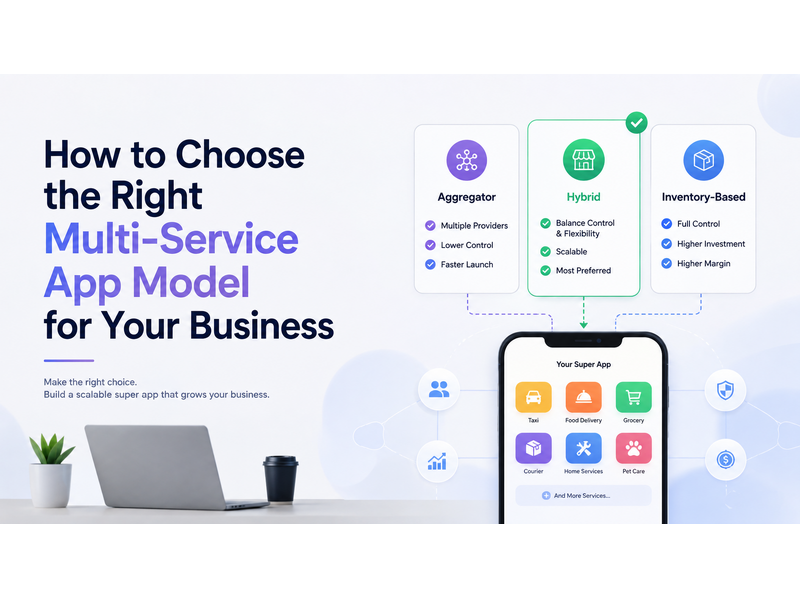
Start With the Business Model, Not the App
Before comparing software solutions, define what the business is actually trying to build.
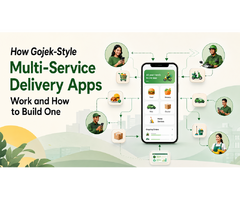
A multi-service platform connects customers with different services in one app. The business can earn through commissions, service fees, subscriptions, delivery charges, or a mix of these.
The key question is simple: which services actually have demand in your target market?
For example, a city with strong demand for daily essentials may support food, grocery, and courier services together. In another market, transport and home services may perform better.
The app should support the business model, not define it.
Decide Whether You Need a Multi-Service Platform
Not every business needs multiple services at launch.
A single-service app is easier to manage when you are testing a market or building early demand. A multi-service model makes sense when services share customers, delivery systems, payments, or providers.
Adding unrelated services too early can confuse users and increase operational load.
A practical approach is to start with related services. For example, food delivery and grocery delivery often overlap in user behavior. Courier or logistics services can be added later when demand is proven.
Check How Services Work Together
Each service has its own workflow. A taxi service does not operate like home cleaning or grocery delivery.
Before choosing a platform, map how each service will work:
- How does a customer place an order or request?
- Who accepts and fulfills it?
- How is pricing calculated?
- How is tracking handled?
- How are payments and commissions processed?
- What happens when a provider cancels?
If the system can support these workflows without breaking the user experience, a multi-service model is workable.
Understand Customization Needs
White-label and ready-made solutions can save time, but not all offer the same flexibility.
Check if you can control:
- Services offered
- User flow and booking process
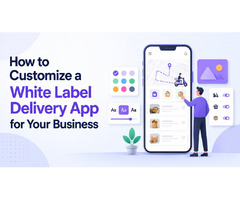
- Branding and design
- Payment methods
- Provider management
- Pricing rules
- Admin controls
This matters because most businesses expand over time. You may start with two services and later add more based on demand.
A flexible system makes this easier. For example, Gojek-style solutions like Gojek Clone App Script allow businesses to choose and manage multiple service categories based on their needs.
Keep User Experience Simple
A multi-service app can become confusing if not designed properly.
Users should quickly understand what services are available and how to access them. Navigation, categories, search, booking, and payments should feel consistent across all services.
At the same time, each service should still have its own logic where needed.
The goal is simple: one app, easy to use, and multiple services that feel connected.
Don’t Ignore the Admin and Provider Side
The customer app is only one part of the system.
You also need tools to manage:
- Providers or drivers
- Orders and bookings
- Payments and commissions
- Availability and scheduling
- Customer support
- Reports and analytics
As services increase, these tools become more important.
A proper multi-service system should include separate roles for customers, providers, and admins so operations stay organized.
Launch Small, Then Expand
Many businesses make the mistake of launching too many services at once.
A better approach is to start with a few strong services, then expand based on real usage data.
This helps you:
- Understand customer behavior
- Fix operational issues early
- Improve service quality
- Avoid unnecessary complexity
Once the system is stable, adding new services becomes easier and safer.
Compare the Full Requirements, Not Just Price
When choosing a platform, price should not be the only factor.
Look at the full picture:
- Required services
- Workflow flexibility
- Admin and provider tools
- Scalability
- Customization options
- Payment and tracking features
- Future expansion support
- Maintenance and support
A cheaper system may become expensive later if it cannot support your growth. A more flexible system may be better long-term even if the initial cost is higher.
 Loading